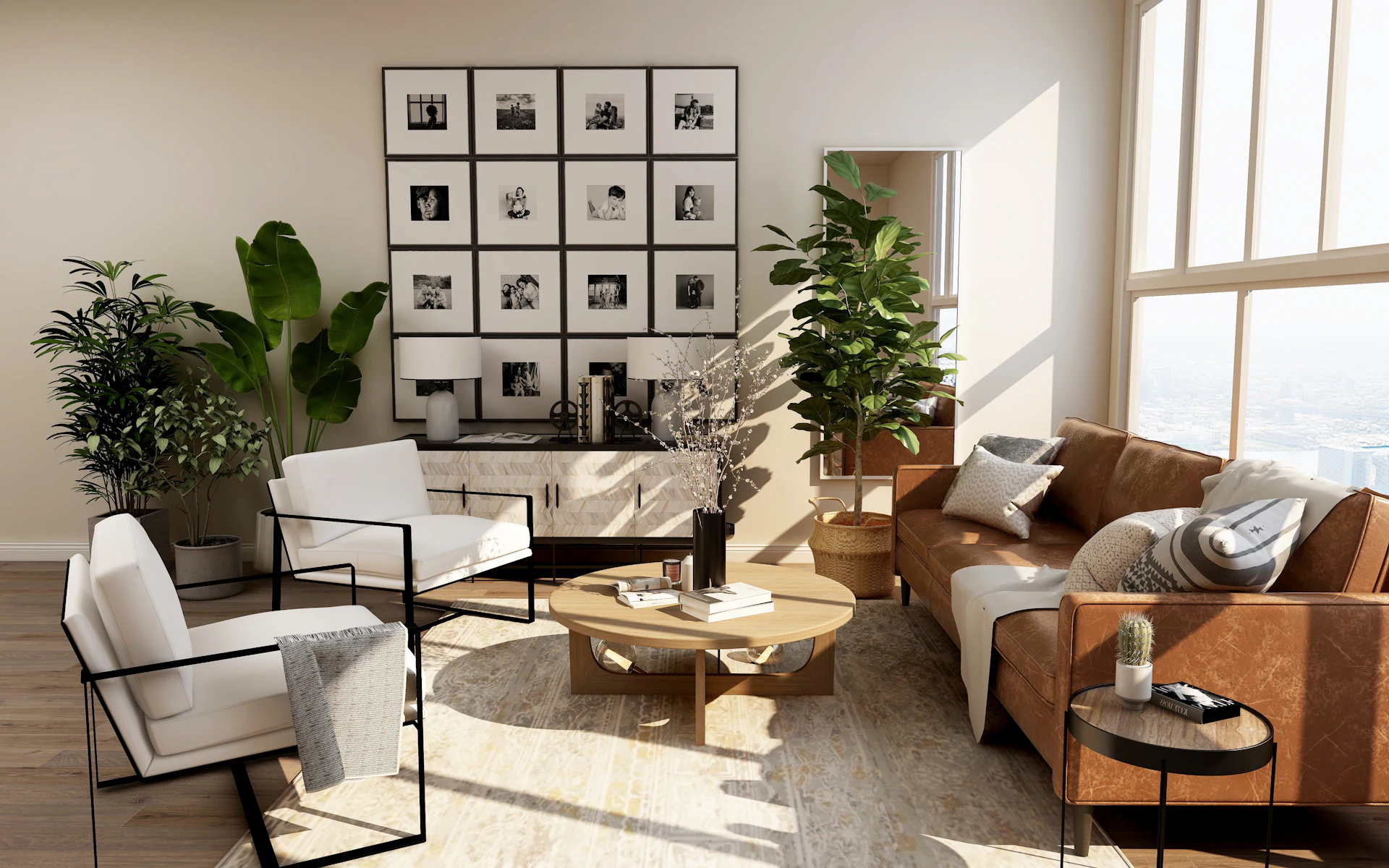
This is a material and design inspiration guide. The conceptual image is not a completed project or a verified sample of a particular product. No product performance is implied.
Begin with relationships, not isolated samples
A cabinet front that looks appealing in a showroom still needs to work with the floor, walls, worktop and light in your home. Start with a background for the larger surfaces, then consider where wood tones or deeper colors add balance.
Place samples together rather than choosing each one separately. A small, clear palette is often easier to discuss when every material has an intended position and purpose.
Wood tones: consider grain and arrangement
The character of a wood finish comes from more than its shade. Grain direction, scale and repetition affect how a full run of cabinetry appears. If continuity is important, confirm the available panel sizes, production method and proposed arrangement before ordering.
Solid timber, veneer and wood-effect surfaces are different material options. Their appearance, construction and care can differ. Record the actual material, finish and product reference rather than using a color name as the entire specification.
Matte finishes: ask about everyday care
Matte describes a visual quality rather than one consistent product. Similar-looking surfaces can have different textures, constructions and care requirements. Do not assume they will respond to marks, cleaning or repair in the same way.
Ask for the manufacturer’s care instructions and the intended uses of the exact product. Understanding the maintenance routine is part of deciding whether a finish fits your home.
Worktops: connect the choice to its use
Stone-like is a description of appearance, not a statement about composition or performance. Confirm the material, thickness, edge treatment, cutouts and installation requirements of the worktop being considered.
A kitchen worktop and a living room display surface face different conditions. Discuss the likely exposure to water, heat and spills using the selected product’s guidance. Support, joints and appliance coordination should be checked by qualified professionals.
Use physical samples to create a shared reference
View materials in relevant light
Look at samples in natural light and under the lighting planned for the room where possible. Phone photographs and screens can shift color, so they should support the discussion rather than determine the final selection.
Write down the selection
Keep a schedule of product names, references, colors, surface treatments, locations and agreed samples. If environmental or performance properties matter to the project, check the relevant documentation and applicable standards for the actual product.
A clear material schedule gives design, quotation and installation a common reference. It also helps you make considered choices within your budget.