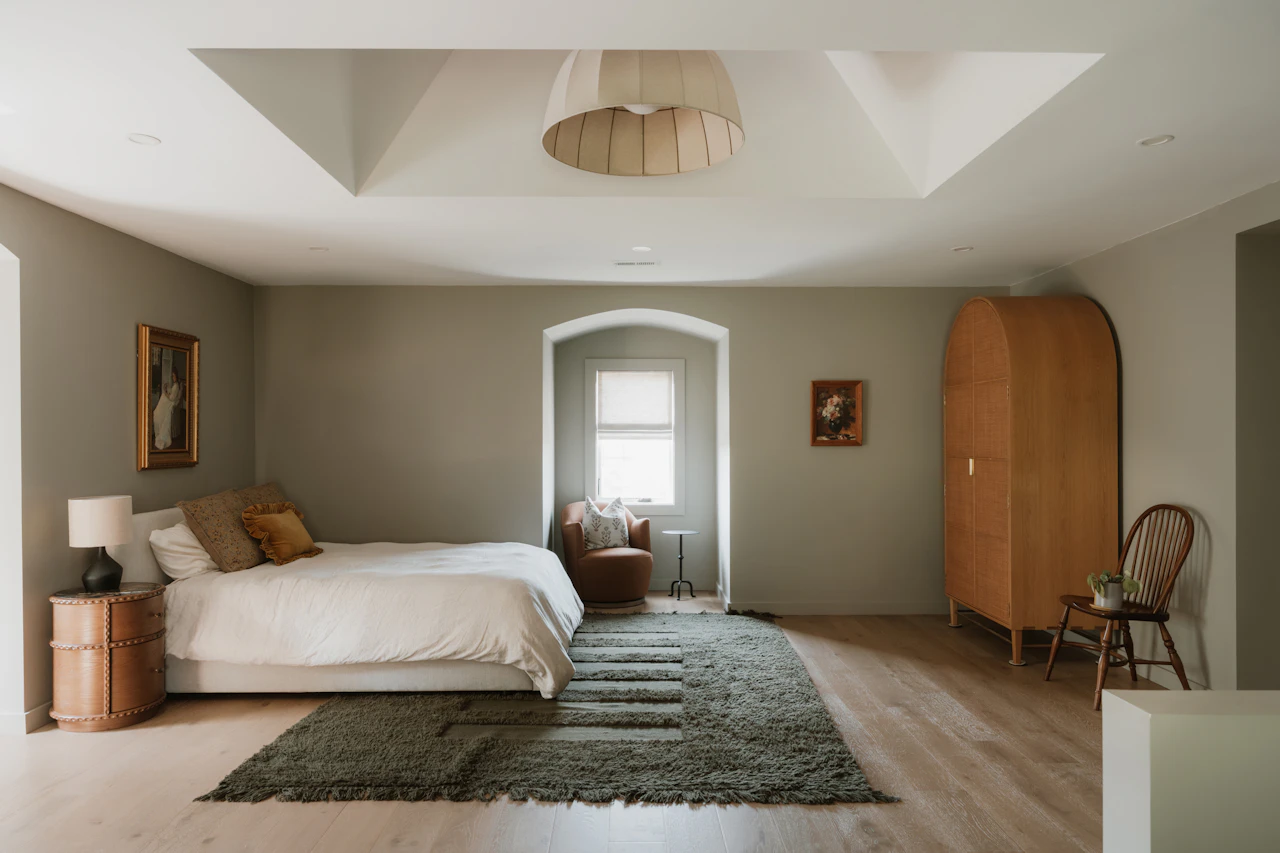
Design inspiration only. The image shows a spatial concept and does not document a completed client wardrobe.
Start with what you wear
An effective wardrobe begins with an inventory. Group long garments, shorter hanging items, folded clothing, shoes, bags and bedding. Then separate everyday pieces from seasonal storage.
These groups help you decide what deserves the easiest access, rather than copying a cabinet layout that was designed for someone else.
Put everyday items within comfortable reach
Consider the height and habits of each person using the wardrobe. Shared wardrobes may benefit from separate everyday areas and a shared section for less frequently used items.
Make hanging space specific
Use your own clothes and hangers to check clear internal dimensions. External cabinet measurements do not account for every panel, fitting or door detail.
Give drawers a clear job
Drawers work best when you know what will go inside them. Compare their useful internal dimensions with the items and organizers you plan to use.
Plan for the in-between
A jacket worn once, tomorrow’s clothes or a bag used every day often needs a temporary resting place. A considered hanging point or small open area can help, provided it suits your tidying routine.
Keep room for change
Adjustable shelves and removable organizers can offer flexibility as your needs change. Choose fittings for their actual purpose, access and maintenance requirements.
Check cabinet doors, drawers, bedside tables and walking routes together. The fixing method and suitability of the supporting wall should be confirmed by qualified professionals before installation.